_edited.jpg)
When Adults Have Child-Sized Reactions
We have all witnessed moments that seem strangely out of proportion to the situation. A capable manager receives constructive feedback and immediately becomes defensive. A family disagreement over something seemingly trivial escalates into days of silence. A colleague interprets a brief email as a personal criticism. Someone spends hours replaying a conversation in their mind long after everyone else has moved on.
What often surprises us is not the emotion itself, but its intensity. The reaction appears much larger than the event that triggered it. It is tempting to dismiss these moments as childish, irrational or simply "overreacting". A more compassionate, and ultimately more useful, perspective is to recognise that many adults occasionally respond to present-day situations using emotional habits that first developed much earlier in life. These responses may once have helped us cope with disappointment, criticism, uncertainty or conflict. The difficulty is that strategies which protected us as children do not always serve us equally well as adults.
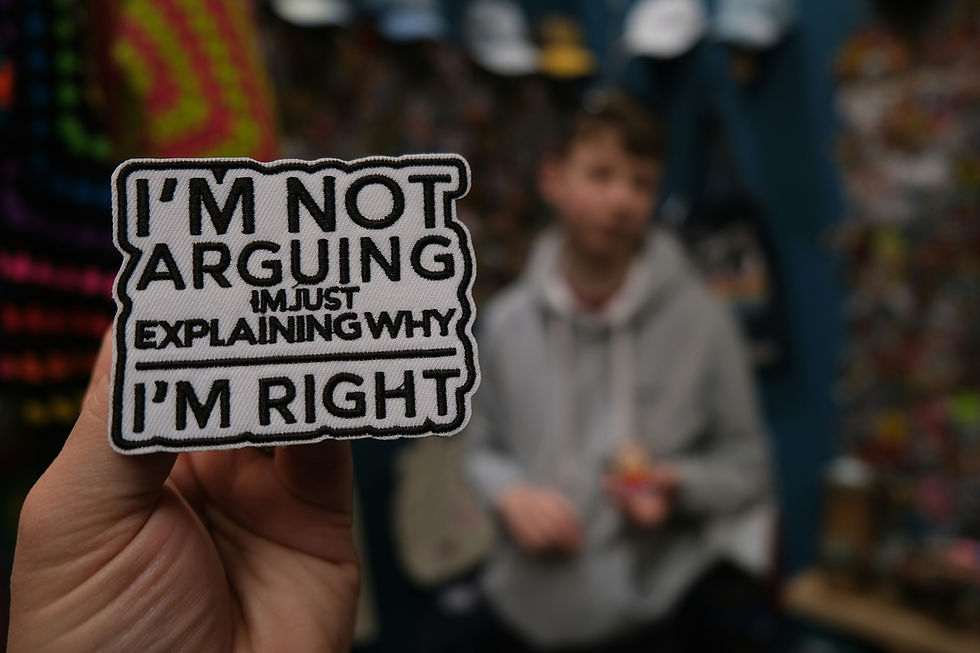
[Image from Unsplash - @ianodonnell]
The Child Never Really Leaves
We often speak about childhood in extremes. On one hand, we celebrate the idea of keeping the child within us alive. We admire curiosity, imagination, humour, spontaneity and the willingness to try something new without fear of failure. On the other hand, childhood is also used as criticism. We describe someone as childish, immature, irrational, spoilt or entitled whenever they respond poorly to a situation.
Reality is considerably more nuanced than either description.
The child within us carries both gifts and protective habits. It remains the source of much of our creativity, optimism, playfulness and capacity for joy. It may also carry fears, insecurities and emotional strategies that developed long before we possessed the language, experience or perspective to respond differently. Withdrawal, people-pleasing, perfectionism, defensiveness, emotional outbursts or avoiding difficult conversations were often not flaws in childhood. They were attempts to stay safe, gain approval, avoid conflict or protect ourselves in the only ways we knew how.
The challenge is not that these strategies once existed. The challenge is that many of them quietly continue directing our responses decades after the circumstances that created them have disappeared. Emotional maturity therefore is not about rejecting our younger selves. It is about recognising which parts of that younger self continue enriching our lives and which parts deserve to evolve alongside us.
We Grow Older Faster Than We Grow Emotionally
Growing older happens automatically. Emotional maturity does not. While time gives us experience, it does not necessarily teach us how to regulate disappointment, receive criticism without becoming defensive, communicate hurt without blame, or repair relationships after conflict. Those abilities develop through reflection, practice and a willingness to examine ourselves honestly.
Throughout life we invest enormous effort developing practical skills. We learn to drive, manage money, build careers, raise children and lead organisations. We attend courses to improve our technical expertise, leadership, communication and professional effectiveness. Far fewer opportunities encourage us to understand why certain situations trigger us, why we avoid particular conversations, or why we continue repeating emotional patterns we ourselves wish would change.
A person may be exceptionally capable at work while struggling to apologise sincerely at home. Another may be deeply caring yet become overwhelmed whenever they feel rejected. Someone else may avoid conflict so consistently that important conversations never take place. These contradictions do not necessarily reflect a lack of intelligence or character. They simply remind us that emotional maturity develops differently from professional success or academic achievement.
Perhaps this is why emotionally mature people are not those who never become angry, anxious or disappointed. They are people who become increasingly curious about their reactions. They learn to pause before responding, recover more quickly after conflict, apologise without feeling diminished, and recognise that discomfort is often part of growth rather than something that must always be avoided.
The Factors That Shaped Us
No one develops in isolation. Every one of us is shaped by a combination of family, school, friendships, culture, life experiences, successes, disappointments and the expectations placed upon us. These influences quietly shape how we view ourselves, how we relate to others and how we respond when life becomes uncomfortable.
This conversation may feel particularly familiar in Singapore. Many parents expressed extraordinary love through responsibility rather than conversation. They worked long hours, prioritised education, ensured food was on the table and quietly sacrificed comforts so their children could enjoy opportunities they themselves never had. Love was often demonstrated through reliability, provision and commitment rather than emotional vocabulary.
That was not a deficiency. It reflected the realities and priorities of a generation focused on building security and opportunity for their families. At the same time, many adults reached later life without ever having been taught how to identify emotions accurately, communicate vulnerability, establish healthy boundaries or navigate conflict constructively. Emotional awareness simply occupied a smaller place in everyday life than it does today.
As a result, many people inherited remarkable resilience, discipline and responsibility alongside emotional habits that were rarely examined. Neither inheritance is entirely positive nor entirely negative. Together they helped shape the adults we became.
Understanding the factors that shaped us is therefore not about assigning blame to parents or previous generations. It is about recognising that while we cannot change those influences, we can decide how much influence they continue to have over the person we are becoming.
When Reflection Is Not Enough
For many people, awareness becomes the beginning of meaningful change. Honest self-reflection, trusted feedback, books, life experience and deliberate practice often help us recognise emotional patterns that previously operated without conscious thought. Once we see them more clearly, we are better able to choose a different response.
There are occasions, however, when insight alone is not enough. The same arguments continue repeating despite good intentions. Relationships become strained in familiar ways. Emotional reactions remain disproportionate even though we recognise them afterwards. We may repeatedly find ourselves thinking, "I know I shouldn't react like this, but I don't seem able to stop."
One reason many adults hesitate to seek support is that emotional wellbeing is often held to a different standard from physical wellbeing. Few people hesitate to engage a personal trainer to improve their fitness, a mentor to advance their career or a financial adviser to strengthen their finances. Yet many quietly wonder whether speaking with a counsellor or coach somehow suggests they are failing.
The opposite is often true. Emotional maturity is one of the few areas of personal development that is expected to improve automatically with age, despite receiving far less intentional investment than almost every other aspect of adulthood.
If your goal is primarily to... | Counselling may be helpful | Coaching may be helpful |
|---|---|---|
Understand why certain emotional patterns developed | ✓ | |
Process unresolved experiences or difficult emotions | ✓ | |
Improve communication and relationships | ✓ | |
Become less reactive in everyday situations | ✓ | ✓ |
Build healthier habits and accountability | ✓ | |
Strengthen self-awareness and emotional effectiveness | ✓ | ✓ |
The distinction is not always clear-cut, nor does it need to be. Counselling and coaching are not competing approaches. One often helps people understand and process experiences that continue to influence them today. The other often helps people develop the practical skills, habits and perspectives needed to respond differently moving forward. Many people benefit from one, the other, or a combination of both at different stages of life.
Continuing To Evolve
It may be that one of adulthood's greatest responsibilities is not simply becoming older, but continuing to evolve.
The qualities that make childhood so precious, curiosity, imagination, humour, optimism and the willingness to explore, continue enriching our lives well into adulthood. They help us learn, connect, adapt and remain open to new possibilities. Those are qualities worth preserving.
At the same time, childhood can also leave us with emotional habits that once served an important purpose but no longer reflect the person we aspire to become. Defensiveness, people-pleasing, avoidance, emotional withdrawal or the fear of disappointing others often deserve understanding rather than judgement. Understanding, however, is only the beginning. Growth comes from deciding whether those habits should continue shaping our future.
Unlike the hard and soft skills we develop through education, work and professional training, emotional maturity is deeply personal. No qualification, promotion or milestone completes that journey for us. It begins only when we decide that understanding ourselves is just as important as understanding the world around us, when we remain open to feedback, and when we become increasingly intentional about how we respond to the people and situations in our lives.
Perhaps that is the real measure of emotional maturity. Not that we never react emotionally, but that our responses increasingly reflect our values rather than our impulses, our intentions rather than our insecurities, and the person we are consciously choosing to become rather than the one we simply became through circumstance.
Growing older is inevitable. Continuing to evolve is a choice we make, one thoughtful response at a time.


Comments